Dive into the history, stories, and surprises of Lake Champlain
Lake Champlain draws people in with its scenery, paddling, and fishing. What keeps them curious once they're here is everything else: the near-miss with Great Lakes status, the shipwrecks resting on the bottom, the iron that helped win a Civil War naval battle, the chair invented on its shore. This is the region's history, geography, and best trivia, all in one place, for anyone who wants to understand Lake Champlain a little better before (or after) they see it in person.
How the region got its name
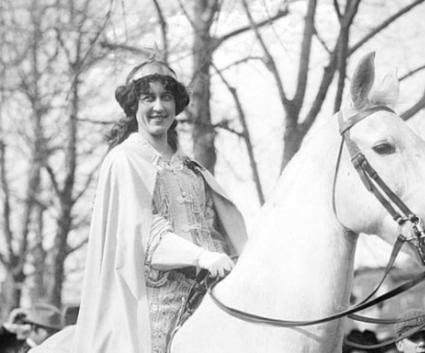
The lake owes its name to Samuel de Champlain, a French explorer and navigator who learned the trade from his father, a ship captain. Champlain crossed the Atlantic repeatedly in the early 1600s, mapping much of what is now northeastern Canada and founding Quebec City in 1608. He died there on Christmas Day in 1635.
During his years in the St. Lawrence region, Champlain heard from Native Americans about a large lake to the south, ringed by mountains and scattered with islands. In the summer of 1609, with the help of local Native guides, he set out to see it for himself, becoming the first European to lay eyes on the lake and the valley that now carry his name.
The centuries since haven't been quiet. Long before Champlain arrived, and long after, the lake and its shoreline were fought over: for control of trade through the St. Lawrence corridor, and later for territory and independence. Some of the oldest recorded history in the United States happened on this water, which is part of why the region is so thick with historic sites, forts, and museums today.
Where is Lake Champlain?
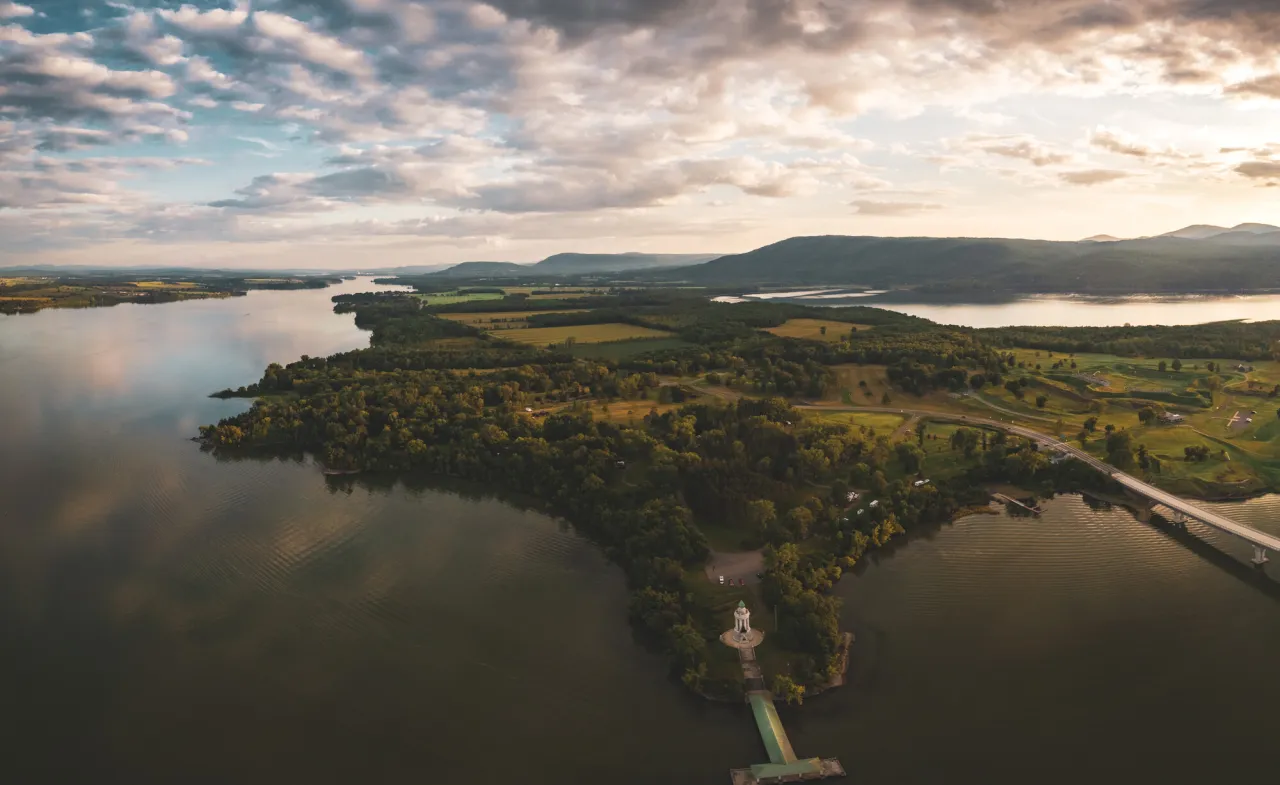
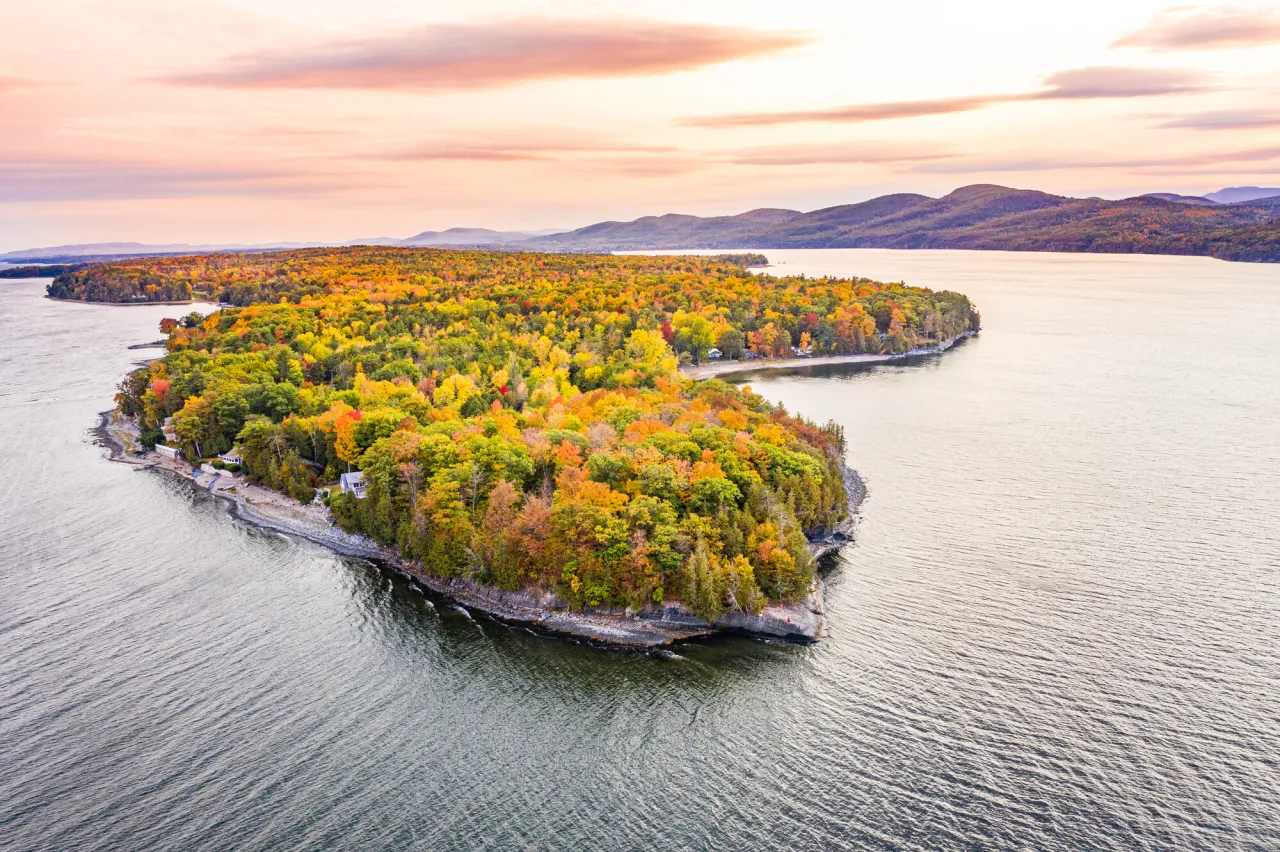
Lake Champlain sits in the northeastern United States, bordered by New York and Vermont, with its northern tip crossing into Quebec, Canada. It's the low point of the six-million-acre Adirondack Park, sitting only about 100 feet above sea level, and it flows north for all 120 miles of its length.
That northward flow means a boat launched anywhere on the lake can reach the sea in either direction. To the north, the Chambly Canal connects Lake Champlain to the Richelieu and St. Lawrence Rivers, opening a path to Montreal. To the south, the Champlain Canal links the lake to the Hudson River, and from there to Manhattan and the Atlantic. Its waters span an international border, making Lake Champlain a shared resource for both countries.
A "Great" Lake, for about 18 days
Lake Champlain is one of the largest natural freshwater lakes in the United States outside of the official Great Lakes, and for a brief moment in 1998, it legally shared their title. President Bill Clinton signed a bill granting it that status on March 6, 1998, as part of a political strategy by Vermont lawmakers to secure federal research funding. However, just eighteen days later on March 24, the designation was rescinded. The fierce backlash didn't come from local residents, who welcomed the funding, but rather from Midwestern politicians and citizens fiercely protective of the original five Great Lakes. They argued that adding the much smaller Lake Champlain cheapened the title, prompting Congress to quickly revoke the status while leaving the federal funding intact.
The lake, by the numbers
Lake Champlain contains 587 miles of shoreline, more than 70 islands, and roughly 6.8 trillion gallons of water. It stretches about 12 miles across at its widest point and reaches depths of 400 feet.
Lake George feeds into Champlain by way of the La Chute River, which drops about 220 feet on its way down, a vertical fall roughly on par with Niagara Falls. That drop is the reason Ticonderoga developed where it did: fast-moving water made for good industry. The Ticonderoga Heritage Museum covers that history in detail, including how the town harnessed the river for power.
What lies beneath
An estimated 300 shipwrecks rest on the floor of Lake Champlain, the byproduct of centuries as a shipping and military route. Divers can visit many of them directly through the Lake Champlain Underwater Historic Preserve. The Lake Champlain Maritime Museum has spent more than 30 years studying these wrecks and offers Shipwreck Tours: an excursion boat takes visitors to a wreck site, where a remotely operated underwater vehicle streams live video to a monitor on board.
One of the best lakes in the country for bass
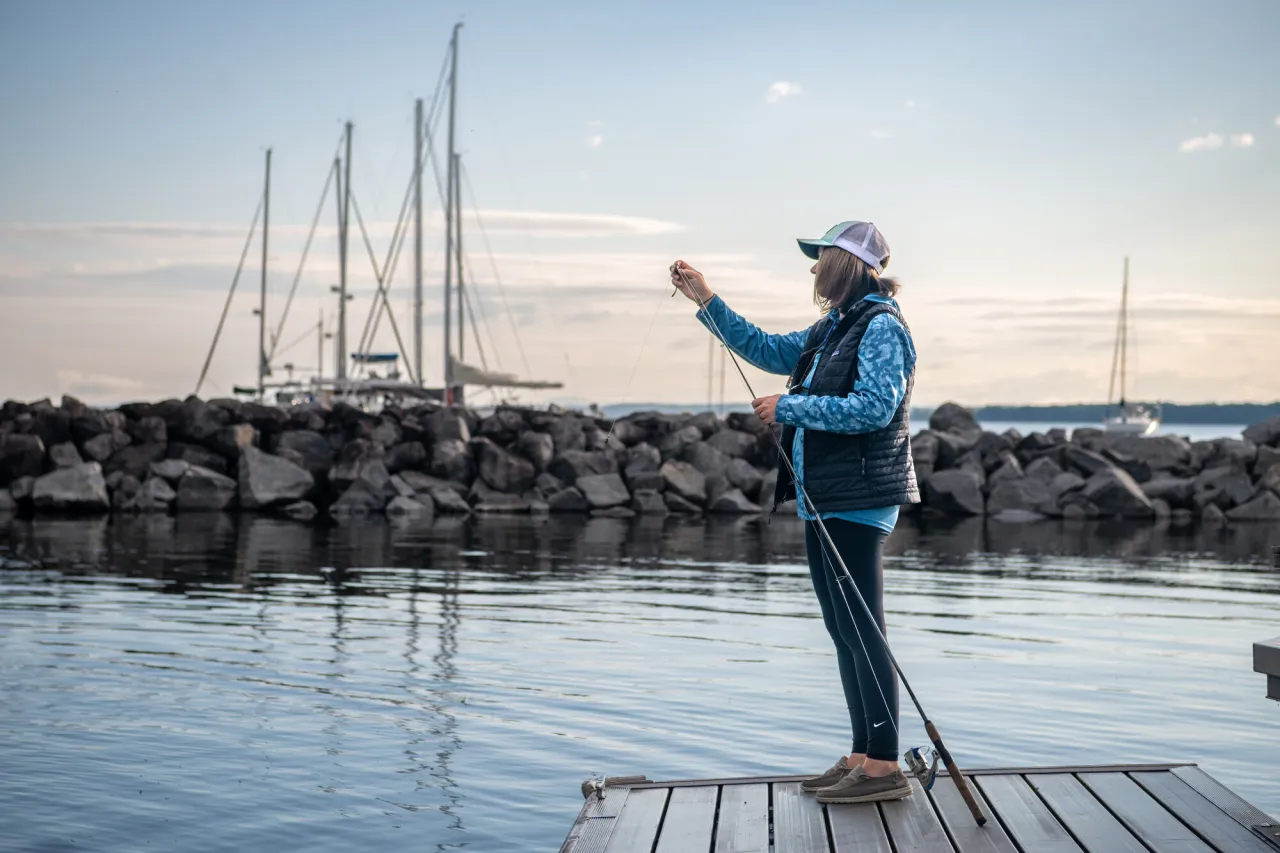
Bassmaster.com regularly ranks Lake Champlain among the top bass fishing lakes in North America, and in 2014 the World Fishing Network placed it in the top seven, calling it one of the best lakes on the continent for both largemouth and smallmouth bass.
A ferry that's been running since 1759
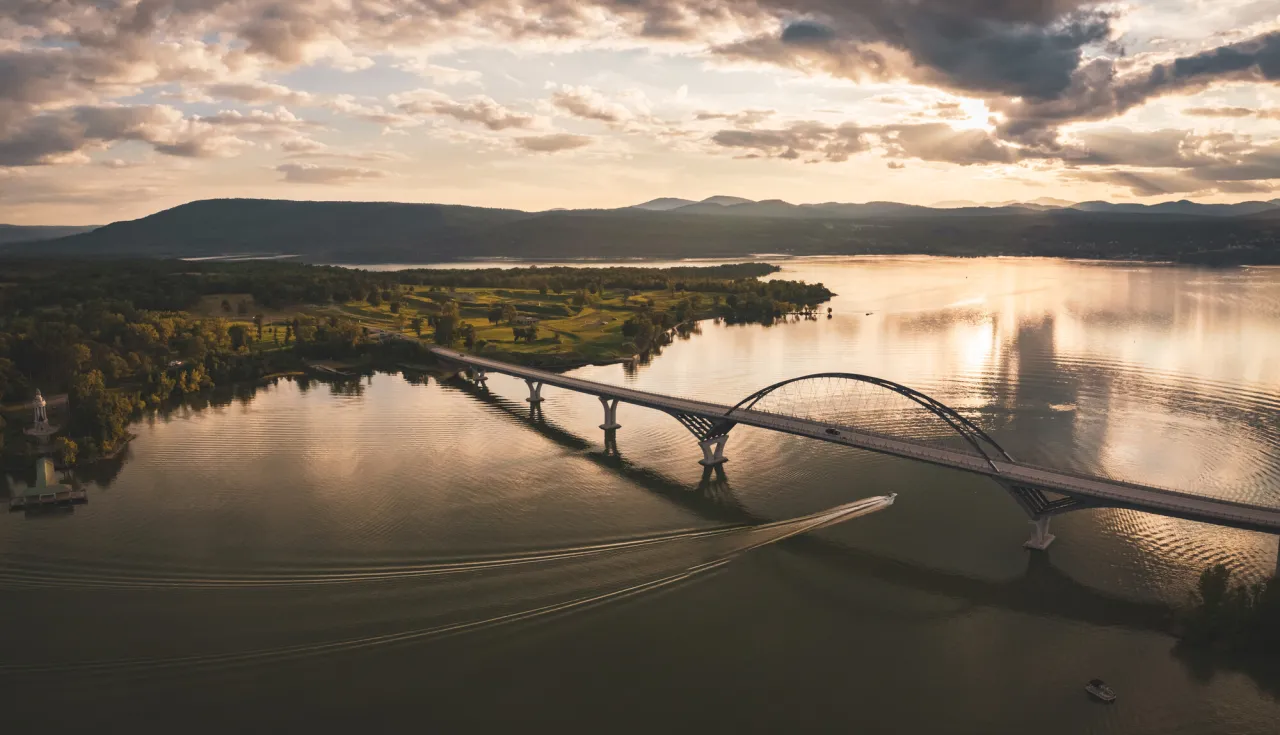
The Ticonderoga Cable Ferry has connected Shoreham, Vermont, to Ticonderoga, New York, at the same crossing point for more than 250 years. It runs seasonally, from early May through late October, with roughly seven-minute trips daily between 7 a.m. and 6 p.m., a rare chance to combine a genuinely historic route with a short trip out on the water.
The birthplace of the Adirondack chair
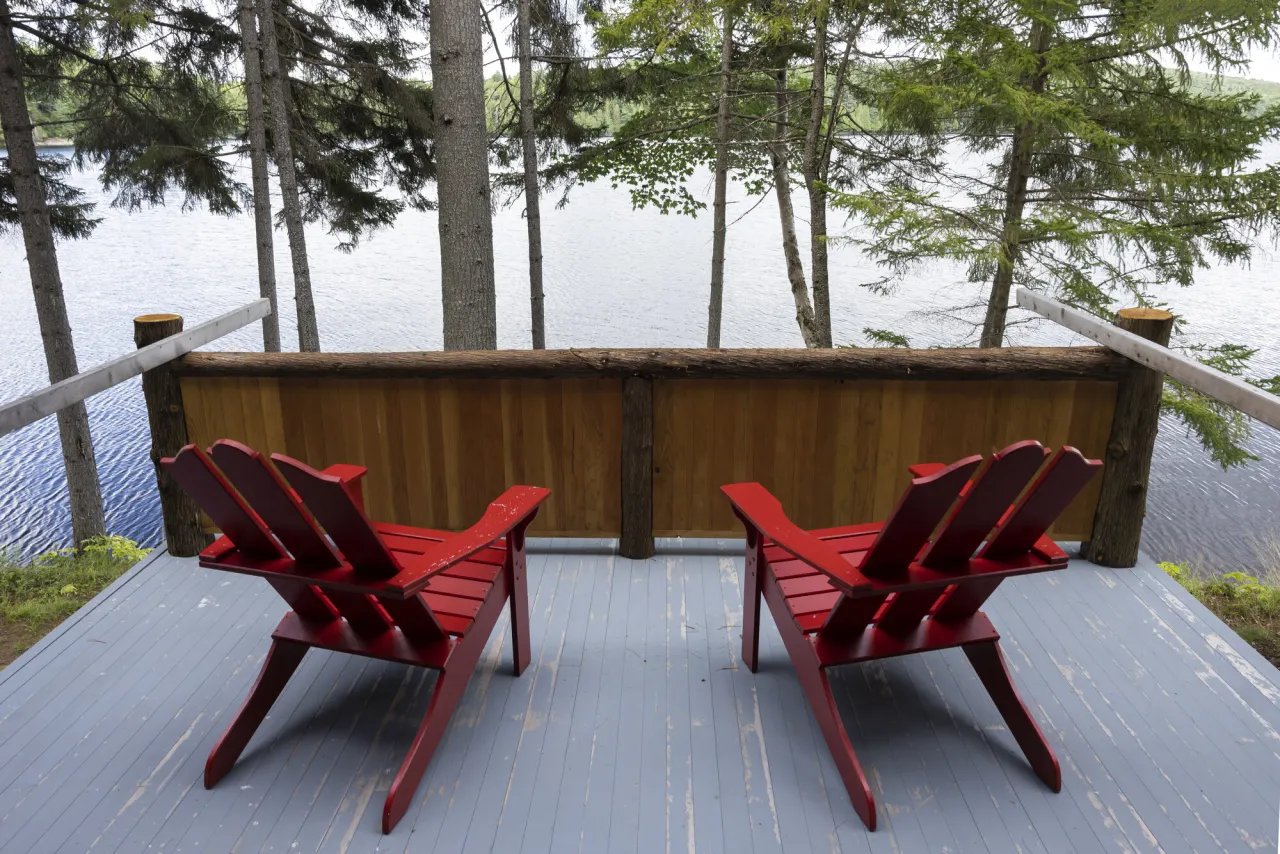
The lake has inspired plenty of reasons to linger, including one of the Adirondacks’ most recognizable designs. In the early 1900s, Westport summer resident Thomas Lee designed a sturdy, slanted outdoor chair for his family's lakeside property, one built to hold up against the elements while giving a comfortable view of the water. That design became the Adirondack chair, now found on porches and shorelines well beyond the region that invented it.
Arctic City: Lake Champlain's silent film era
Long before Hollywood became the center of the movie universe, filmmakers made films on the shores of Lake Champlain. During the silent film era of the early 1900s, Port Henry, New York, became known as the "Hollywood of the East," home to a bustling studio complex known as Arctic City. The studio took full advantage of the region's dramatic scenery to shoot rugged wilderness pictures and major motion pictures starring silent film icons like Pearl White. Lake Champlain frequently played a starring role on camera, standing in for frozen northern wastes, deep-woods rivers, and stormy waterways.
A blue highway, and a flyway
Centuries before explorers and soldiers used Lake Champlain as a travel corridor, birds already relied on it. The lake forms part of the Atlantic Flyway, one of the major migratory bird routes in North America, and millions of birds still pass through each year. Birders come to the shoreline hoping to spot rarer species that stop over on the journey.
Ironville and the USS Monitor
One of the lake region's least expected connections runs straight to the American Civil War. The USS Monitor, the first ironclad warship commissioned by the U.S. Navy, is best known for the Battle of Hampton Roads in March 1862, when it faced off against the Confederate ironclad CSS Virginia (formerly the USS Merrimack). It was the first battle ever fought between two ironclads, and it reshaped naval warfare worldwide.
The iron behind that ship came from the Adirondacks. Two companies mined and processed iron in Crown Point during the war: Hammond's Crown Point Iron Company, which ran a mine and blast furnace at Hammondville, and Penfield & Harwood, which operated a mine at Hammondville alongside a bloomery forge and separator at Ironville. Beyond ship plating, Crown Point iron went into railroad equipment and other wartime production. Wagons carried the smelted iron from the furnace and forge to Hammond's Wharf on Lake Champlain, where it traveled by canal boat to the Albany Iron Works in Troy for fabrication. The finished hull of the Monitor launched from the Continental Iron Works shipyard in Brooklyn in 1862, but its material story started underground in Crown Point.
Ironville has a second claim to fame that has nothing to do with the Civil War: it's considered the birthplace of the Electrical Age, the site of the first industrial application of electricity in the United States.
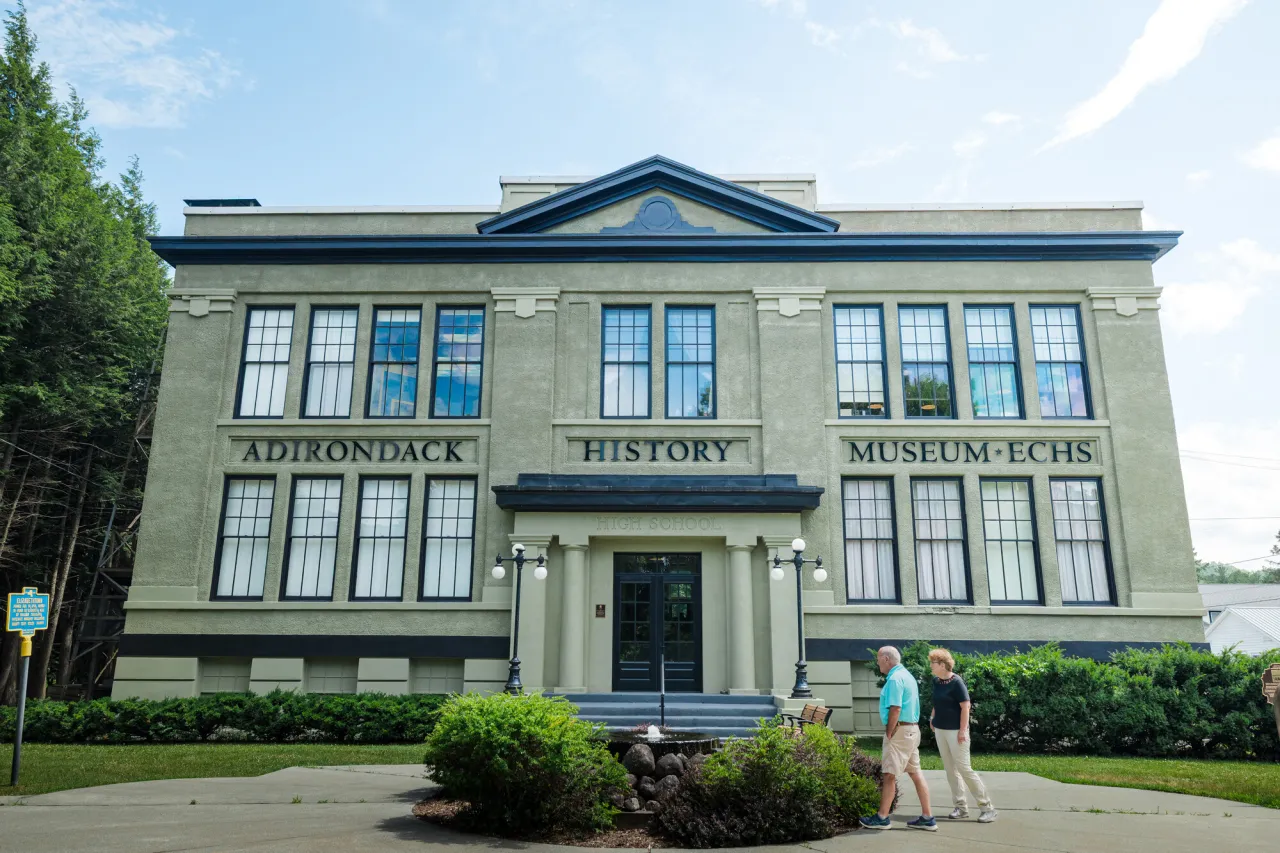
Visitors can trace this history in person at the Penfield Homestead Museum, dedicated to the region's ironworking industry, and at the Iron Center Museum, run by the Moriah Historical Society, which covers the area's mining and railroad history. A regional self-guided heritage trail also lets visitors trace the local chapters of the Monitor's story across Crown Point's historic mining and forge sites.
Come see it for yourself
There's a lot more to Lake Champlain than the view from the shore, though the view holds up on its own. Between the near-miss with Great Lakes status, the shipwrecks, the Civil War iron, the silent films, and the chair that's now on porches everywhere, the lake has more history packed into it than most people realize. Lodging and dining options around the region make it easy to stay a while and see the rest in person.